Mary McVee (University at Buffalo, NY)
Positioning and positioning theory past, present, and future:
Thoughts on affordances and challenges for research and analysis
Thoughts on affordances and challenges for research and analysis

In this talk, I revisit some of the history and background of positioning theory and consider a variety of positioning strands that have emerged over the past few decades and more recently. The dynamic nature of positioning theory offers affordances for researchers across disciplines who are investigating diverse topics and challenges in areas of communication, counseling therapy, education (and all its many sub-disciplines), health and medicine, international relations, language studies, linguistics, marketing, psychology, and other areas. In recent years, the increased volume of research publications applying various forms of positioning analysis represents a growing body of intellectual work. Taken collectively, these works demonstrate how positioning can contribute to the study of human interaction in diverse contexts. While rich and multidisciplinary publications provide many options for researchers and analysts, scholars also face multifaceted decisions about methods of analysis in positioning. Drawing from past studies, this talk will illustrate and introduce some of these methods. Looking to the present and future, I will also consider some emerging issues that scholars face. For example, in areas such as human-computer interaction, particularly artificial intelligence, new conceptual and methodological challenges are emerging. I argue that beyond being a tool for informative inquiry, positioning theory and positioning analysis can become means for transdisciplinary collaborations. In the face of technologies and social movements that are rapidly reshaping people’s daily lives, such collaborations are essential to address complex questions and to carry out research that supports productive social change.
Alexandra Georgakopoulou (King’s College, London)
Reimagining positioning in the postdigital era:
Toward an expanded conceptual toolkit
Toward an expanded conceptual toolkit
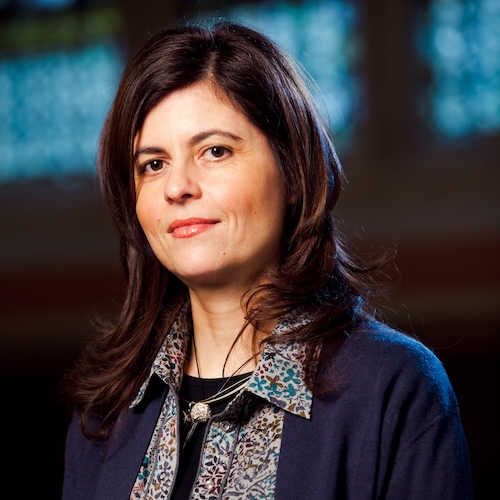
Positioning analysis has long treated identity as locally enacted in interaction. Drawing on my work on small stories research and technography, in this talk I argue that contemporary, platformed and emerging GenAI narrative environments demand a rethinking of positioning. In previous work, I have shown how identity work is increasingly shaped by multimodal affordances and specific inter-modal connections as well as by the socio-technical curation of stories that leads to the development of small story formats (2022; 2025; forthcoming). These changes unsettle classic assumptions about co-construction (positioning Level 2) and complicate what we mean by “teller agency” in story environments where humans and machines now jointly participate. In this talk, I advance my thinking by demonstrating conceptually what a reimagining of positioning looks like: I do so by integrating within each level what I call conceptual enhancements. These offer attention points for the analysis, alerting to specific analytical angles. I highlight three interrelated processes that, in the spirit of the 3 levels of positioning, are analytically separable: Templatization (mainly pertinent in Level 1), Recognition (mainly pertinent in Level 2), and Memefication (mainly Level 3). I argue that in terms of teller strategies, these socio-technically shaped processes call for rescripting and repurposing of stories, projection of relatability at Level 2, and a tilt toward replicable character types and sameness at Level 3. This postdigital expansion of positioning analysis can more adequately capture identity work in today’s hybrid storytelling environments.
Jarret G. Geenen (Radbout University, Nijmegen)
From discursive action to mediated action:
A multimodal mediated approach to positioning
A multimodal mediated approach to positioning

In this talk, I explore the theoretical and methodological ramifications of approaching positioning as an inherently multimodal phenomenon. In recent years multimodal approaches have gained significant methodological currency across a wide range disciplinary and thematic domains. This has also been the case with respect to Positioning Theory (see Silvestri & McVee 2025). While there is a definitive empirical advantage to approaching positioning as something that is accomplished through multimodal communicative means – which will be thoroughly explored – there are also wide-reaching ramifications when we broaden our methodological scope to include non-linguistic phenomenon in our analytical endeavor. These ramifications are critically considered by examining multimodal positioning in naturalistic social interaction as well as in new media multimodal environments.
I contend that positioning is not merely a discursive accomplishment but a multimodal, embodied, and materially mediated one. Resultantly, I consider how a multimodal mediated perspective (Scollon, 1998; Norris 2011, 2013; Geenen 2013, 2022) can provide fruitful analytical framework to examine positioning as an emergent and layered phenomenon, distributed across modes, multiply mediated and responsive to the micro-temporal dynamics of interaction. While this would indeed broaden our framework to accommodate for position, stance and orientation as locally produced through non-verbal communicative action, it also requires a degree of theoretical and methodological harmonization.
When approaching positioning from a multimodal mediated perspective, we open the possibility that positions and stance coalesce with the dynamics of focus and interactional attention which can be fluid, multiple and layered. This begs some significant empirical questions regarding the relatedness of the interactional foregrounding and backgrounding of actions and the extent to which kinds of positionings congruently shift through this dynamic. In addition, the analytical focus on mediated action implicitly problematizes our traditional notions of agency. This extends far beyond generally accepted notions of jointly or co-produced interactional accomplishments and necessitates considering agency against a backdrop of increasingly complex and interrelated mediational means. Our contemporary communicative ecology is increasingly dominated by complex and interconnected smart and intelligent technological tools which brings to the fore serious questions about the nature of communication, social actors and their social actions.
I contend that positioning is not merely a discursive accomplishment but a multimodal, embodied, and materially mediated one. Resultantly, I consider how a multimodal mediated perspective (Scollon, 1998; Norris 2011, 2013; Geenen 2013, 2022) can provide fruitful analytical framework to examine positioning as an emergent and layered phenomenon, distributed across modes, multiply mediated and responsive to the micro-temporal dynamics of interaction. While this would indeed broaden our framework to accommodate for position, stance and orientation as locally produced through non-verbal communicative action, it also requires a degree of theoretical and methodological harmonization.
When approaching positioning from a multimodal mediated perspective, we open the possibility that positions and stance coalesce with the dynamics of focus and interactional attention which can be fluid, multiple and layered. This begs some significant empirical questions regarding the relatedness of the interactional foregrounding and backgrounding of actions and the extent to which kinds of positionings congruently shift through this dynamic. In addition, the analytical focus on mediated action implicitly problematizes our traditional notions of agency. This extends far beyond generally accepted notions of jointly or co-produced interactional accomplishments and necessitates considering agency against a backdrop of increasingly complex and interrelated mediational means. Our contemporary communicative ecology is increasingly dominated by complex and interconnected smart and intelligent technological tools which brings to the fore serious questions about the nature of communication, social actors and their social actions.